World-first basic income trial boosts Indigenous livelihoods and Amazon rainforest protection
Press Release Summary
- University of Bath analysis of Cool Earth basic income trial finds a range of positive outcomes for rainforest and Indigenous communities.
- The findings, as reported in The Guardian, suggest that when rainforest communities have greater security and autonomy, they are better able to protect the rainforest they depend on.
- Close to 90% of participants adopted environmentally beneficial practices, including an 87% active participation rate in collective actions like native reforestation, reducing forest burning, and restoring critical water springs.
What challenges do rainforest communities face because of the climate crisis?
Indigenous peoples and local communities are among the world’s most effective rainforest protectors. Their stewardship helps safeguard biodiversity, store vast amounts of carbon, and protect rainforests that are essential for a stable climate.
However, the climate crisis is exposing these communities to extreme weather events, with this year’s Super El Nino threatening to make matters even worse. From raging wildfires destroying homes to frosts wiping out whole harvests, the impacts are devastating. These increasing challenges make communities far more likely to feel the pressure from loggers, who often arrive just when they are struggling the most with cash in hand. Families are then left in an impossible position — stay in poverty and protect the rainforest they call home, or sell their land to loggers for quick cash and relief from immediate danger.
This is where Cool Earth’s basic income model can be an effective solution. It means rainforest communities can say no to loggers and protect the rainforest, on their terms. In turn, one of the best resources we have in the climate crisis is left standing strong.
What is basic income and how can it be effective?
A basic income model provides people with regular cash payments that they can spend however they choose.
When communities have to struggle for cash, their focus is on survival, which makes them vulnerable to offers of cash from loggers or miners. Without money to pay for essentials like food and medicine, Indigenous people and local communities can be forced to sell their land, leaving them without a future source of income and the climate with a loss of healthy forest.
But a basic income relieves them of that pressure. By giving cash directly to individual households, we can provide communities with the choice to say no, giving them greater financial security and keeping the rainforest safe. The fact we’ve seen them invest their time in restoring the forest is an added bonus.
Does giving cash to rainforest communities work?
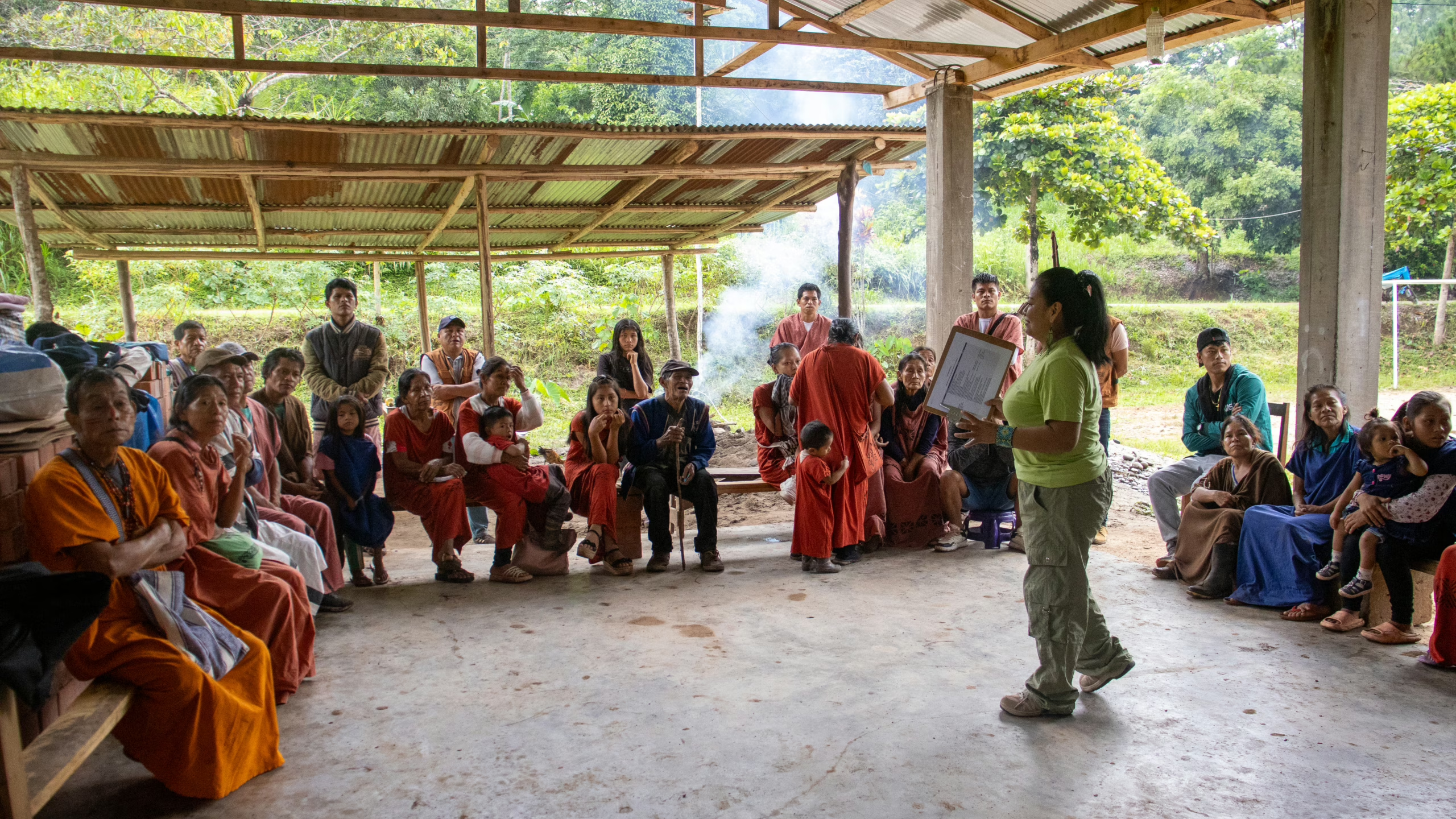
According to analysis by the University of Bath released today, Cool Earth’s basic income pilot project in which Indigenous people in the Peruvian Amazon were given an unconditional basic income was shown to significantly improve community wellbeing, strengthen food security, and support rainforest protection.
Managed by Cool Earth, the pilot project is the first of its kind to provide Amazonian Indigenous people with a basic income, and offers compelling new evidence that direct cash support can benefit both people and the planet.
During the two-year pilot, 211 people in three communities in Peru’s Asháninka region were given a basic income in the form of cash transfers of 1,032 Soles – equivalent to £2 a day – to spend as they liked.
Using a ‘Cash Plus’ model, the pilot also delivered a complementary programme of community-led training, covering financial education, Indigenous rights and governance, environmental conservation, and climate change.
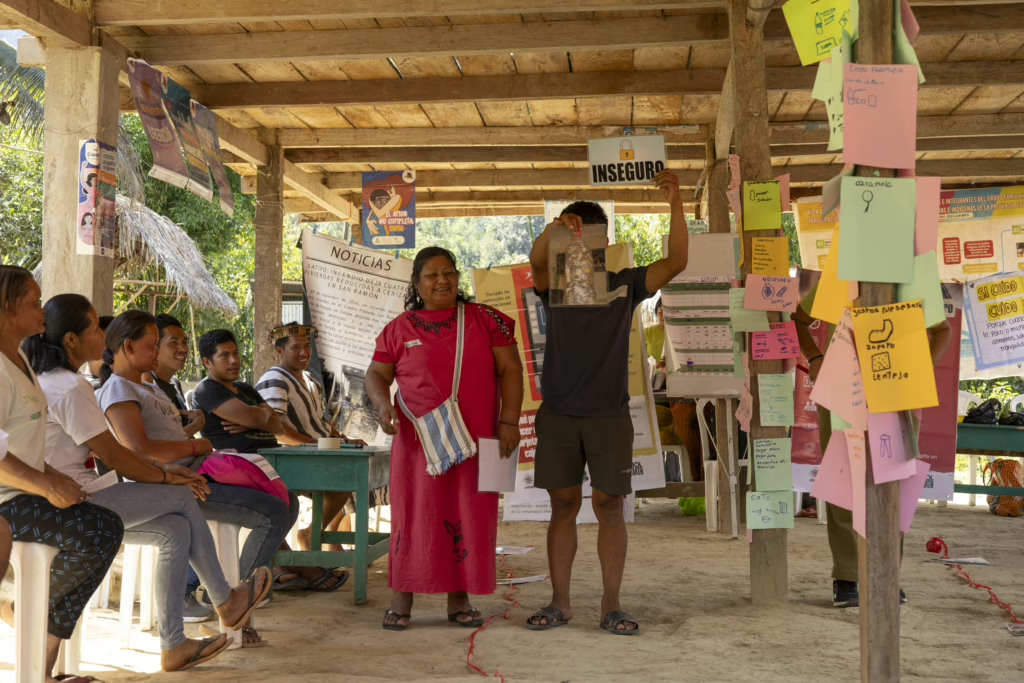
Analysis of the pilot by researchers from UBI Bath, the University of Bath’s Universal Basic Income Research Group, examined changes and outcomes across areas including income generation, livelihoods, community cohesion, education, food security and nutrition, and forest protection.
The key findings include:
- Close to 90% of participants adopted environmentally beneficial practices, including an 87% active participation rate in collective actions like native reforestation, reducing forest burning, and restoring critical water springs
- 85% of participants reported that the pilot empowered local leadership, leading to enhanced social cohesion and a greater capacity for self-organised community initiatives
- Sharp reduction in food insecurity: Households unable to afford nutritious food fell from 73% to 26%. Meal skipping dropped from 49% to 22%
- Poverty down, stability up: 70% of households were able to save money, up from 49%
- Reversal of labour migration: the share of participants forced to leave their homes to find external labour, often precarious, fell from 43% to 18%
- Major gains in housing quality, sanitation, energy access, and asset ownership
- Higher wellbeing and optimism for the future: Self-reported wellbeing scores more than doubled over the study period
- Participants consistently reported that the income enabled them to shift away from short-term survival work and invest time in farming, family life, and community initiatives
How does having a basic income improve people’s lives?
One of the pilot’s participants, who sits on their community’s executive committee, said: “The pilot scheme has meant a great deal to us; it has been a help to the community.”
“Before, we used to go out to work as day labourers, where we were paid very little. The pilot scheme has helped us to buy food, tools and other things we couldn’t afford on a day labourer’s wage. This small incentive provided by the pilot scheme has also given us more time to work on our land and buy seeds (maize, plantains) to sow on our plots.”
“In our community, our view of Mother Nature hasn’t changed. For us, the forest is our hardware shop, our market, our medical centre; Mother Nature encompasses everything, and we protect and care for her.”
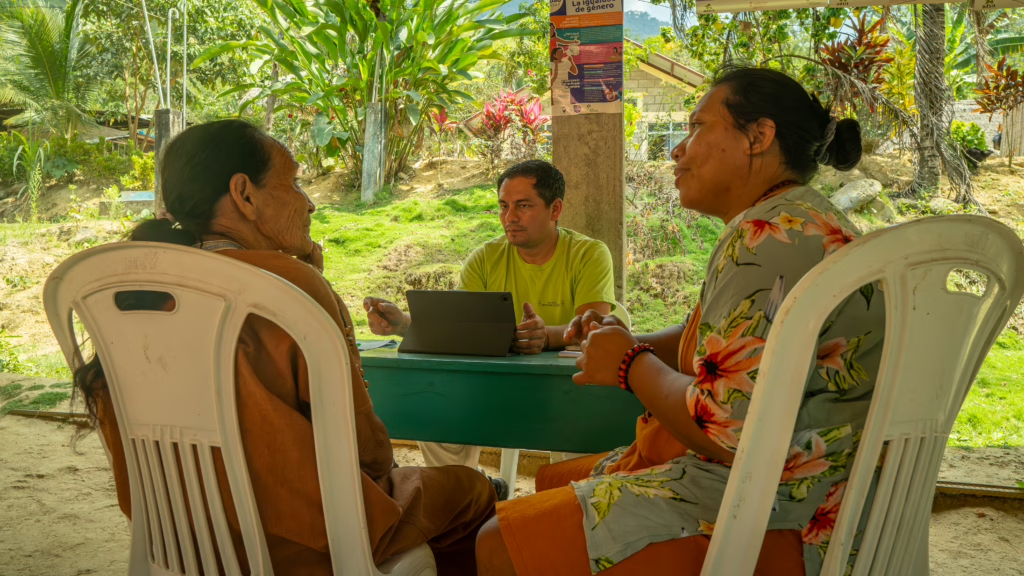
Dr Neil Howard, UBI Bath Lead and Reader in Bath’s Department of Social & Policy Sciences, said: “Giving historically marginalised Indigenous people a no-strings basic income brings a multitude of benefits both to their communities and their environment.
Cash makes a massive and immediate difference to people’s lives, whether it’s reducing outward migration for work, reductions in poverty or enabling future planning and investments. The ‘Plus’ element of this project, providing help to communities to organise, also leads to better farming techniques and skills, land use and richer community life and better relationships.
All of this helps ethical conservation. The incentive to exploit or abandon land is diminished, and people are put front and centre with respect and dignity, which contrasts sharply with the colonial history of conservation and Indigenous policy.”
Can basic income build climate resilience?
Crucially, the pilot also showed promising environmental outcomes, a rare feature in basic income research.
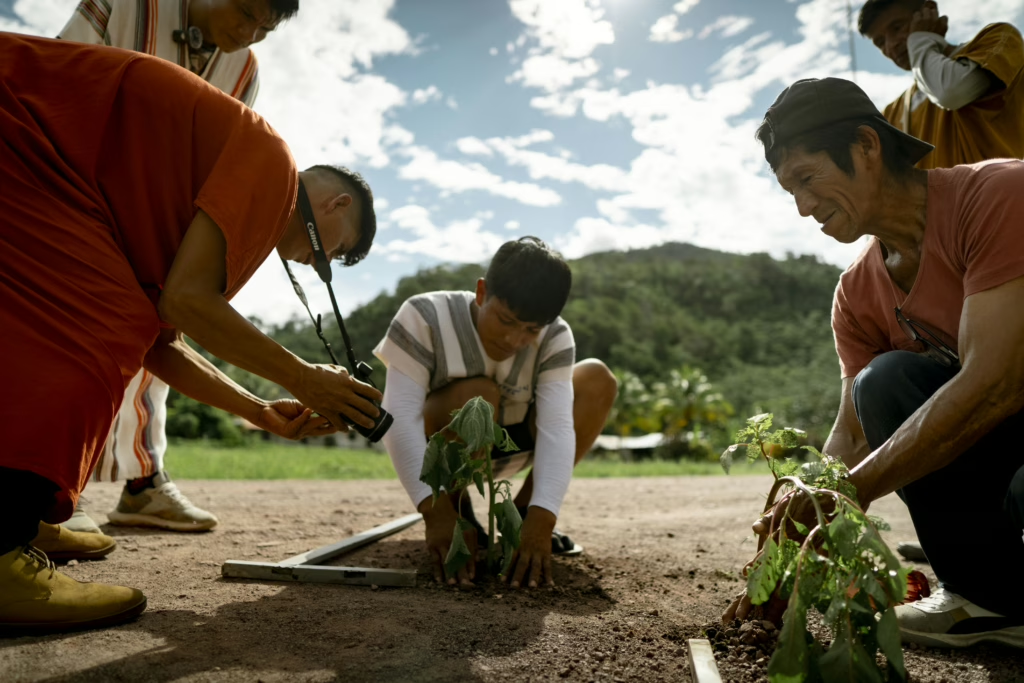
Close to 90% of participants reported adopting environmentally beneficial practices, including reforestation and tree planting, protection of water sources, reduced forest burning, and the revival of Indigenous agricultural knowledge.
The researchers also found that these changes were not driven by financial incentives alone, but by improved economic security, stronger community organisation, and renewed environmental awareness.
“The findings suggest that when communities have greater security and autonomy, they are better able to protect the ecosystems they depend on,” said Dr Nick Langridge, a member of the UBI Bath team and a co-author of the report.
Does basic income improve access to food, healthcare, and education?
The pilot drove major improvements in both diet and health outcomes. Families reported moving beyond basic staples to more diverse and nutritious diets, including increased consumption of protein and fresh produce.
These changes were linked to reduced illness, lower stress and anxiety, and improved access to healthcare and medicines.
At the same time, education emerged as a key long-term benefit. Over three-quarters of participants financially supported a family member’s education, with many reporting the ability to consider secondary and higher education for the first time.
Is basic income a sustainable solution?
Designed as an alternative to traditional, top-down conservation approaches, the programme was rooted in a principle of reciprocity, recognising Indigenous communities as essential stewards of ecosystems rather than passive beneficiaries.
Sofia Vargas, Cool Earth’s Peru Country Manager, said: “Contrary to traditional critiques that basic income creates dependency or reduces work incentives, this first of a kind pilot shows the opposite.
By alleviating the pressure of immediate survival, regular income enabled rainforest communities to invest in long-term planning and productive assets. They redirected time and resources into their own smallholder agriculture, while investing in formal education for their children, household technology like solar panels and wifi, and savings, which helps families become more resilient to the impacts on crops and homes due extreme weather, flooding and wildfires that are increasing in region due to climate change.
The report shows substantial improvements at both household and community level, showing that cash and financial training are mutually reinforcing. Cash helps create more resilient rainforest communities, and financial training means the impact will be long lasting, encouraging financial planning as individuals and a community and shared action so forests remain standing.”
Could the basic income model work around the world?
The researchers note that the study was conducted over a relatively short period and did not include a control group, meaning further research is needed to assess long-term impacts and scalability. Cool Earth is also open to further long-term studies of impacts in the future.
The pilot project will now be adopted by Cool Earth as part of its work on an ongoing basis with aims to roll this out later this year to new communities in the Peruvian Amazon and in Colombia to prove its wider applicability.
The charity is also busy influencing global policy makers in the UK and Colombia, with the aim that they will role this out to all rainforest communities as a more direct way of protecting the world’s forests. So far, they have met with HM Treasury, DESNZ, DEFRA, and Colombian Congress members.
The report ‘Fighting the climate crisis with reciprocity: Towards Indigenous autonomy’ is available now here.
Notes to Editors
For more information or to request interviews, contact:
UBI Bath, University of Bath: Will McManus, [email protected] / [email protected] +44(0)1225 385 798
Cool Earth: Celia Bergin, [email protected] / [email protected] +44 (0)1326 536136
- Cool Earth is a UK-based NGO working alongside rainforest communities to halt deforestation and strengthen resilience.
- ONAMIAP (National Organisation of Indigenous Women of the Peruvian Amazon) advocates for Indigenous women’s rights and leadership across Peru.
- OMIAASEC is a regional Indigenous women’s organisation providing deep community engagement and implementation expertise.
- UBI Bath brings together researchers from across the University of Bath and beyond working on Universal Basic Income and its intersection with contemporary public policy challenges.
- AidKit provides the tech and expertise that helped get cash to Indigenous people deep in the Amazon rainforest.