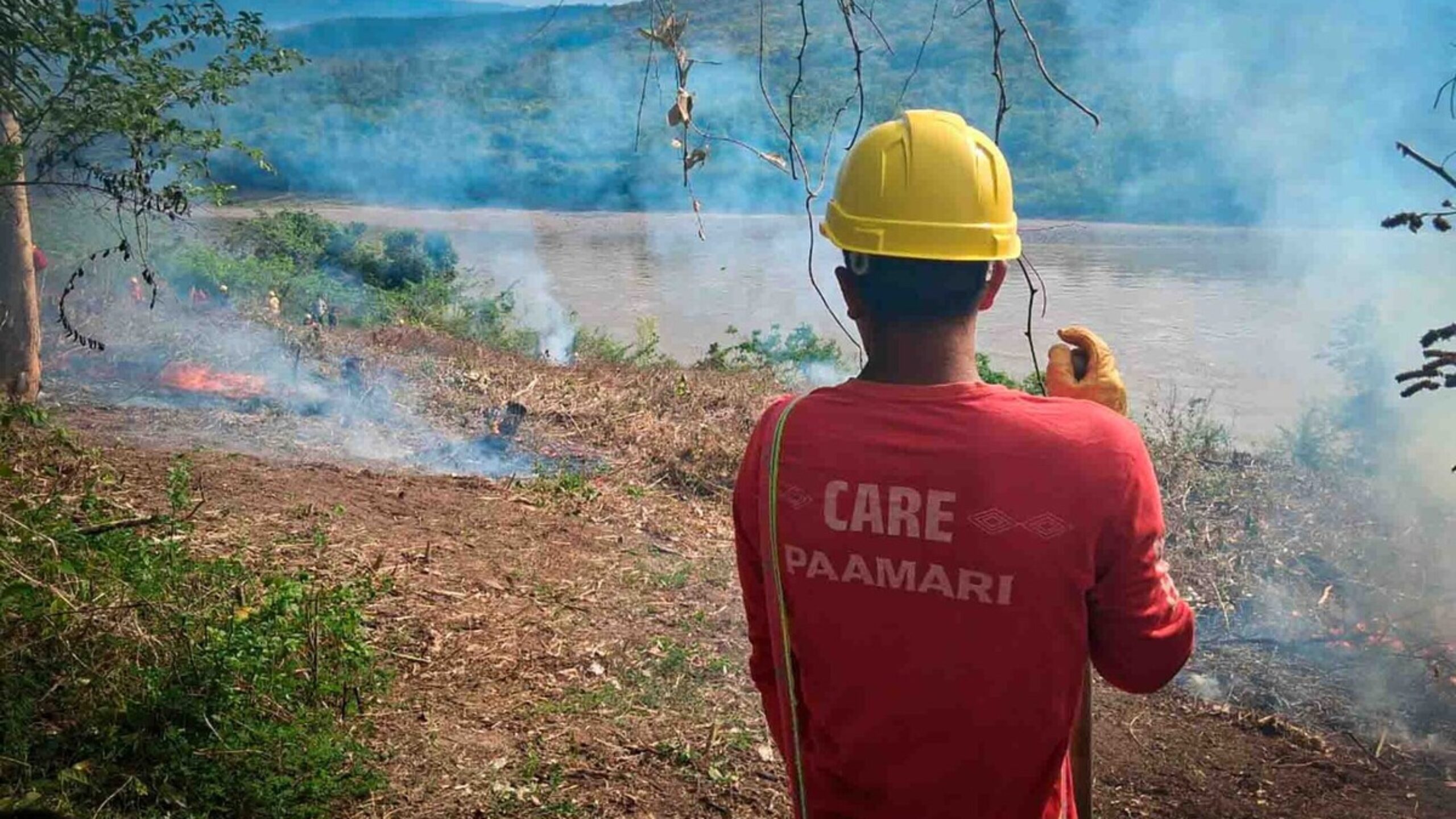
Agricultural burning: the leading causing of wildfires in the Amazon
Wildfires in the Amazon aren’t random. Here’s what’s really driving them.
In 2024, most wildfires in the Peruvian Amazon didn’t start by accident. They started with agricultural burning that got out of control.
But fire isn’t the enemy. In the Amazon, it has always been part of life. For the Asháninka people, it is a natural element they have long lived in harmony with.
When used correctly, fire clears land for planting and helps regenerate the soil. It isn’t something to fear, it’s something to know, respect and work with.
Managed well, fire works with the rainforest. Not against it.
Climate change is rewriting the rules.
Rising temperatures, stronger winds, and prolonged droughts are making conditions in the Amazon unpredictable.
In 2024, Peru’s Amazon lost almost 50,000 hectares to wildfire. That’s more than double the year before.
It’s not just trees lost. It’s food, medicine, wildlife habitats. It’s carbon released back into the atmosphere.
All this loss only accelerates the climate crisis even further. It’s a vicious cycle that can only be broken by working alongside communities.
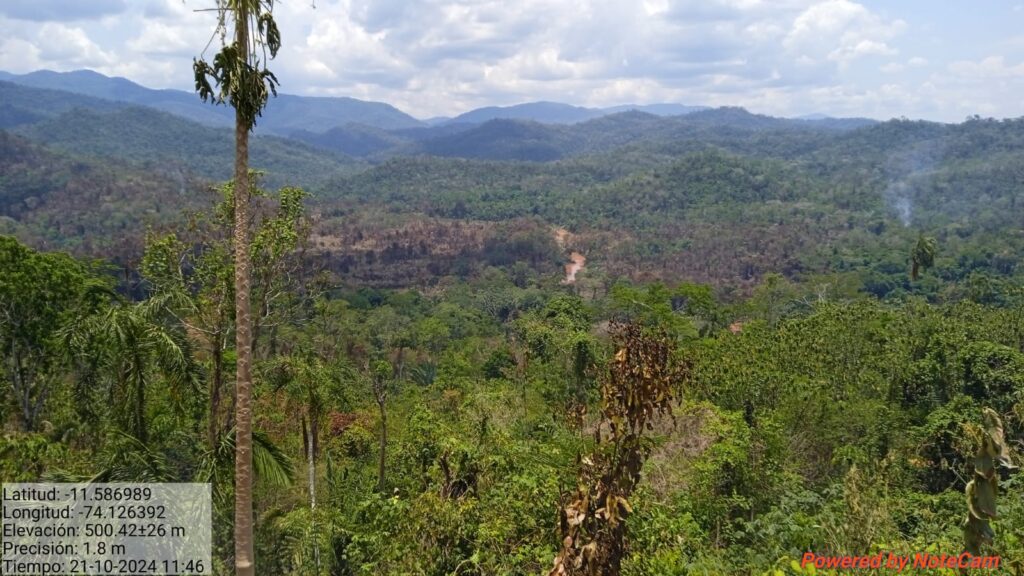
Working with fire, against wildfires.
‘PAAMARI’ (the Asháninka word for fire) is a wildfire prevention programme that we support, led by our partners ‘CARE’. It works across 45 Asháninka communities along the Ene River in the Amazon rainforest.
The idea is simple: don’t ban fire. Understand it. Use it well.
Controlled burning, done right, stops wildfires before they start. And the people who know how to do that best are the ones who’ve lived with fire in the rainforest for generations.
At the centre of PAAMARI is the Fire School. A training scheme where ancestral knowledge meets modern tech.
Satellite data helps track risks. Communities share real-time updates from the ground. Together, they build a system that’s faster, sharper and far more effective than either could be alone.
Together, they create something neither could manage alone: a dual monitoring system that is proving highly effective at preventing wildfires.
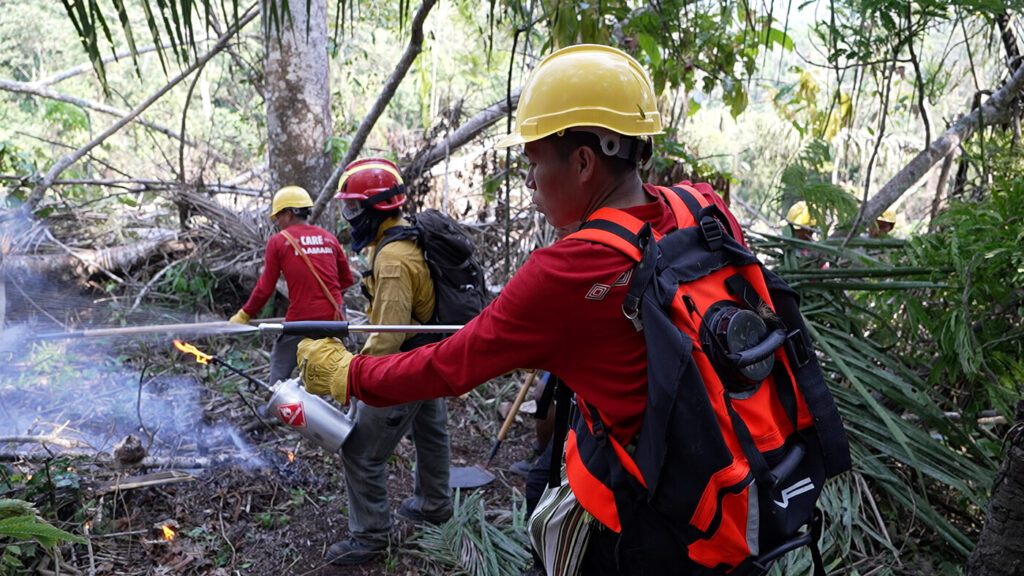
Wildfire prevention in action.
In September 2024, a routine burn in the community of Tsiquireni in the Amazon spread out of control.
Dry conditions and strong winds pushed the fire underground, where it spread unseen. For nearly a month, it burned through 120 hectares of forest, destroying crops and threatening nearby protected areas.
Satellite data alone couldn’t catch it. What made the difference was people.
Over 50 Asháninka community members came together to track the fire, find hidden hotspots, and bring it under control. They used tools, but also their deep, lived knowledge of how fire moves through the rainforest.
That’s what stopped it.
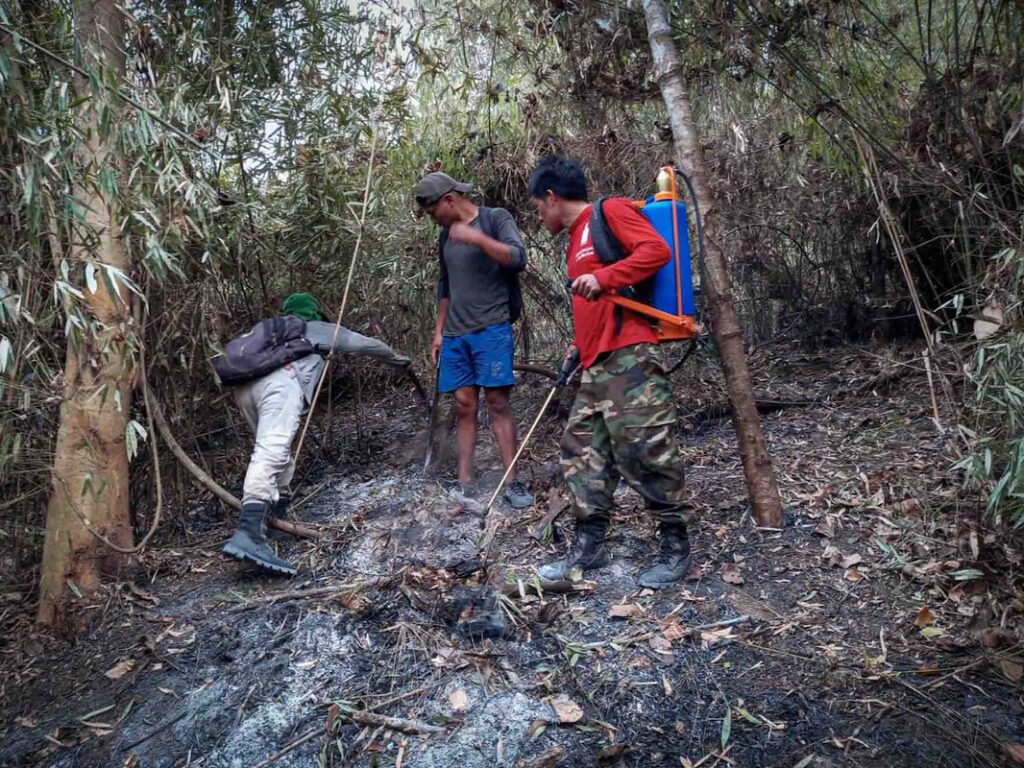
Wildfire prevention doesn’t work from a distance.
It works when Indigenous communities are in the lead. With the tools, knowledge, and support they need.
PAAMARI is already protecting over 242,500 hectares of rainforest. And it’s strengthening the communities who depend on it.
Because when people are supported to protect their rainforest, it stands a better chance.