
Building a basic income pilot directly with Indigenous communities
Two years ago, we launched the world’s first basic income pilot designed specifically for Asháninka communities facing the impacts of the climate crisis in the Peruvian Amazon.
This pilot wasn’t designed in an office. It was co-created with Indigenous women’s organisations, ONAMIAP and OMIAASEC, putting community leadership at the centre from day one.
Together, we built a model that delivers unconditional cash so families can meet urgent needs on their own terms, and strengthen their ability to protect their land.
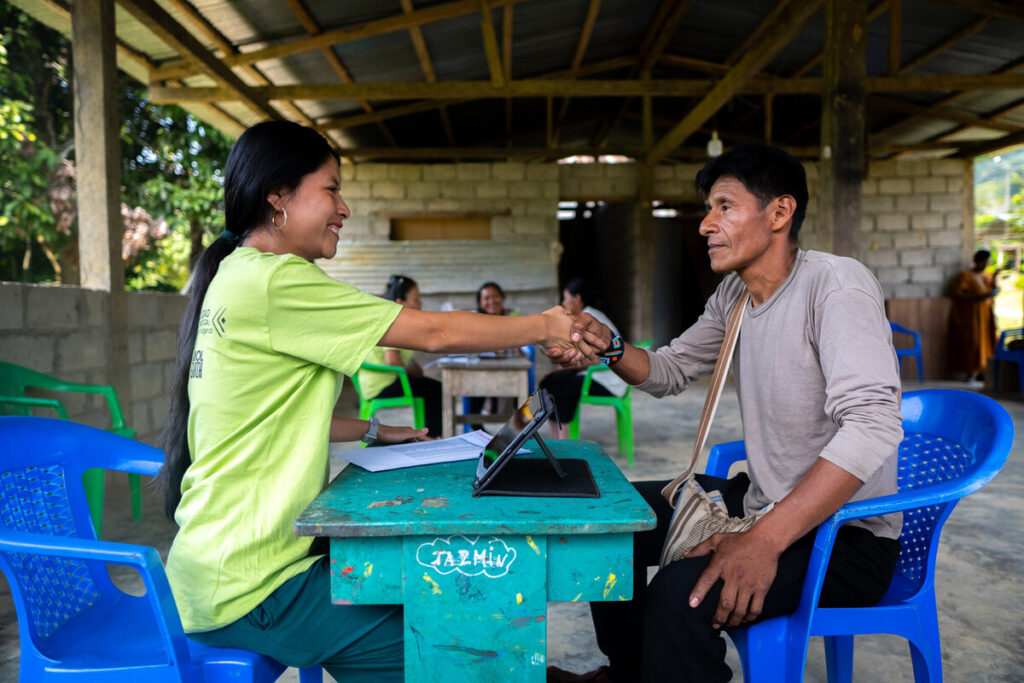
Putting Data Collection in Community Hands
To make this work, we needed digital tools that worked for everyone. And that’s where AidKit came in.
AidKit’s technology was adapted alongside communities to ensure it was simple, accessible and relevant to life in the rainforest. With AidKit’s support, key processes, like community registration and monitoring and evaluation, are now led by our Indigenous partners themselves.
This matters. Too often, data collection is done to communities. Not by them.
One of the biggest challenges was ensuring ONAMIAP and OMIAASEC had full control over how sensitive information was gathered and analysed. AidKit helped solve this by developing software that works offline.
A crucial feature in remote rainforest areas, where connectivity is unreliable and data can easily be lost during fieldwork. Built-in support systems further strengthen this approach, allowing teams to stay in direct contact with participants if support is needed.
“It allowed us to develop surveys offline, without an internet connection. It also helped us collect the data and upload it to the system more quickly and easily,“ says Marianela Santos, Coordinator of the Basic Income Pilot.
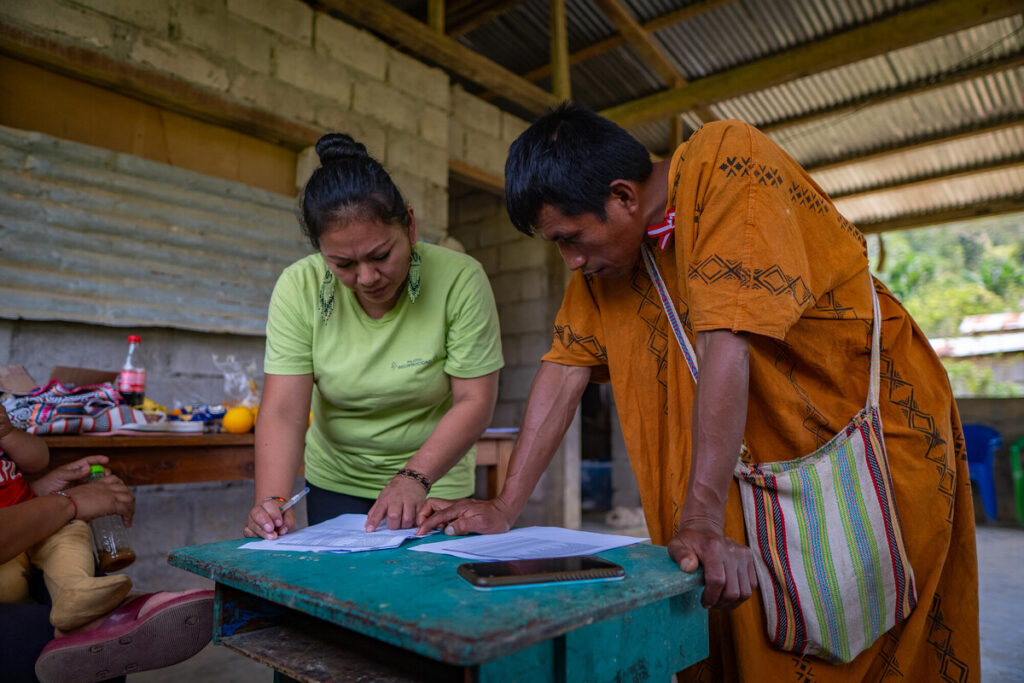
Closing Digital Gaps Through Local Adaptation
Along the way, one lesson has stood out: closing digital gaps is not just about access to technology, but about placing it in the hands of communities and adapting it to local realities, from language and timelines to ways of organising and decision-making.
AidKit’s interface allows teams to communicate in Asháninka, explain processes clearly, and gather meaningful information directly from participants. This makes everything more transparent, more accessible and more human.
“It has been a wonderful experience working collaboratively. AidKit has helped streamline some very important Pilot processes and strengthened communication appropriately, without compromising the data of our participants,“ Marianela adds, reflecting on the Pilot’s information collection processes.
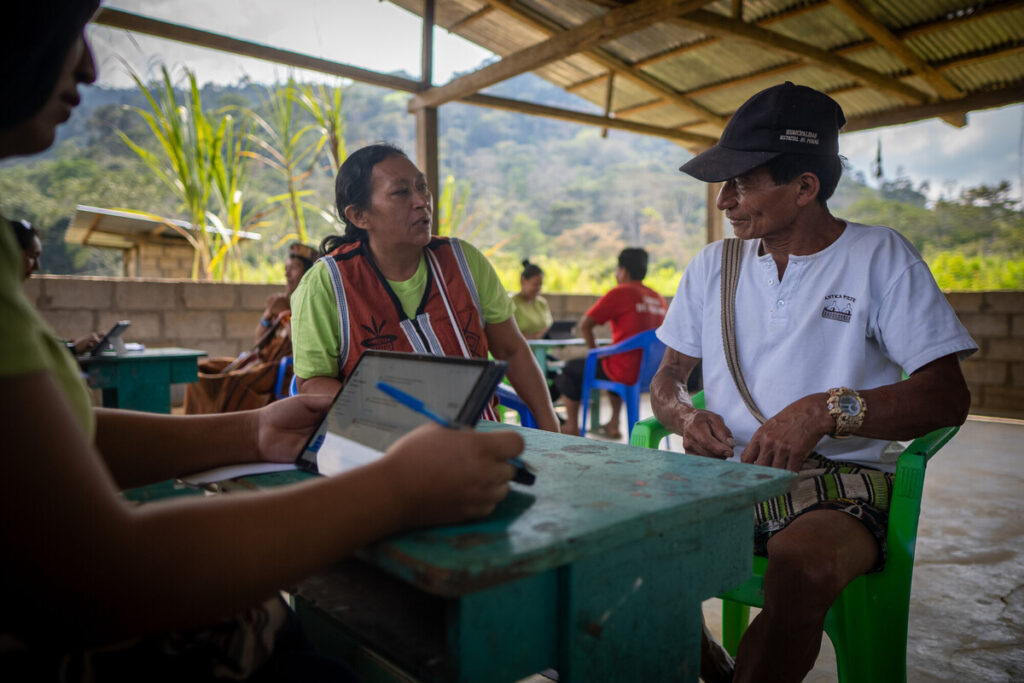
What Real Climate Action Looks Like
Crucially, this approach shifts power away from external data collection and towards community-led monitoring. Asháninka members from ONAMIAP and OMIAASEC now lead these processes within their own communities, strengthening the pilot from the inside out.
The world’s first basic income pilot in the Amazon exists because of these partnerships. From fieldwork to technology, every part reflects the same core principles: trust, co-creation, respect for Indigenous autonomy, and community leadership.
And that’s what real climate action looks like.