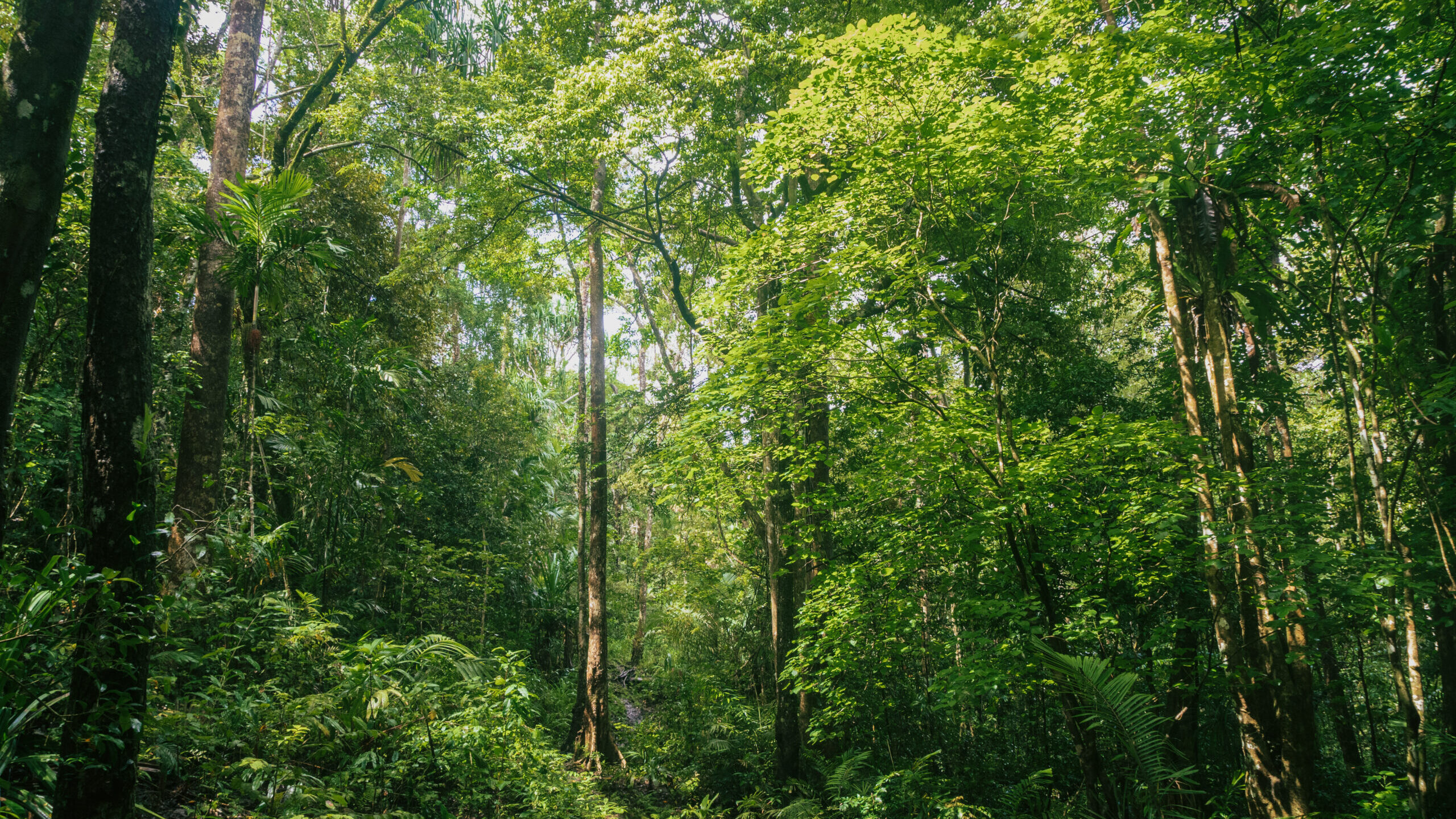
Solutions to climate change: Johan Rockström on rainforest conservation
A Conversation on Rainforest, Tipping Points and Solutions to Climate Change
Tropical rainforest, tipping points, and why direct cash to Indigenous communities might be one of the most effective solutions to climate change we have: that’s what Cool Earth Ambassador Simon Clark sat down to talk about with our fellow Ambassador Johan Rockström.
Johan Rockström is a world-famous climate scientist who directs the Potsdam Institute for Climate Impact Research and co-developed the Planetary Boundaries framework, the science that maps the safe limits for life on Earth, presented to the UN, the EU and governments worldwide. Simon Clark is an award-winning science communicator specialising in the climate crisis, a YouTuber known for making hard climate science make sense, and a PhD researcher in atmospheric physics at the University of Exeter.
Here’s their full conversation.
Why do tropical rainforests matter as solutions to climate change?
Rockström starts with the science behind why forest, and tropical forest specifically, sits at the centre of planetary stability:
“We have scientifically, with the latest Earth system science, been able to identify the planetary boundaries: the environmental processes that we scientifically today understand regulate the stability, the resilience, and the life support of the entire planet.
Among all the terrestrial biomes—grasslands, peatlands, savannas, arid lands—the forest systems stand out as the systems that science shows very clearly are the dominant biome on land, contributing to regulate the climate system, but also thereby the stability of the entire planetary system.”
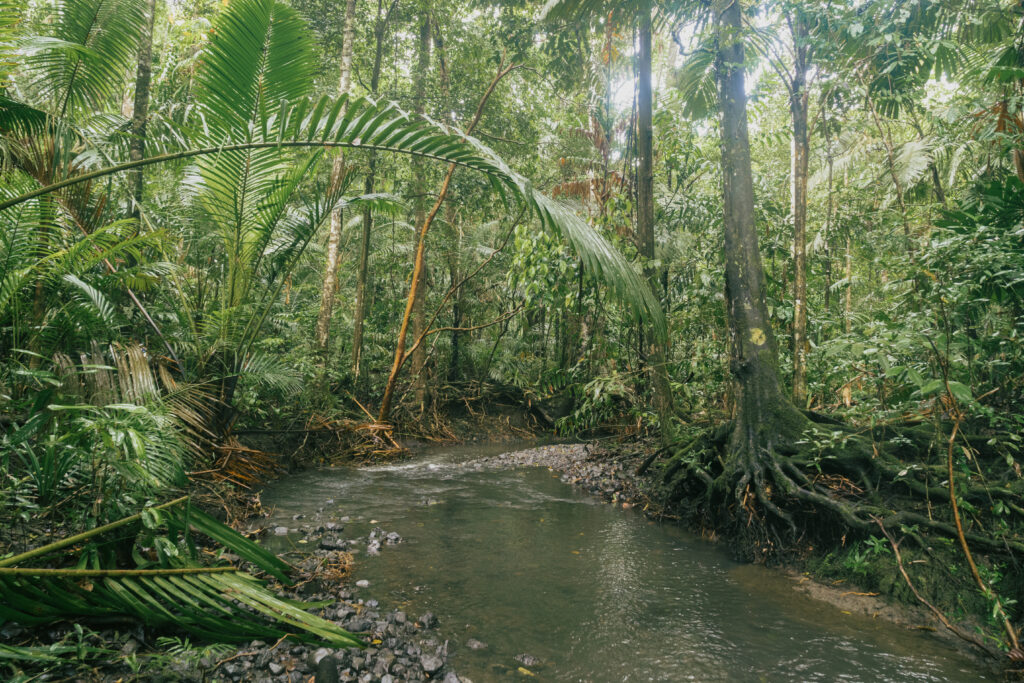
“We have three forest systems: the tropical forest systems, the temperate forest systems, and the boreal forest systems. These three are like biological engines that regulate the very liveability and the stability on Earth.
Among these three, the tropical forest systems are, when you look at the entire role, not only in terms of climate stability, but also in terms of being the host of the richest diversity of species on Earth, on land, and major regulators of freshwater supply through atmospheric rivers.
Because these are rainforests, they by themselves generate 40% of their own rainfall, which then flows in atmospheric rivers downwind. This means that these are systems that are, even beyond the climate system, fundamental for the stability and the resilience of vast continental areas.
So forests are fundamental for the Earth system.”
What is the Planetary Boundaries framework?
“The Planetary Boundaries framework is a scientific framework that tries to answer two questions.
Question number one is: what are the Earth system processes that regulate the stability, the resilience, and the function of the Earth system? For each of these processes, once we scientifically identify them (and so far we’ve identified nine planetary boundary processes) we then identify so-called control variables, which are parameters that are correlated to the health of each boundary.”
“Question number two is: where are we currently in relation to the control variables, the so-called boundaries.
The point of that boundary is that if we stay within it, we have a safe operating space with a high chance of keeping the planet in a livable state for humanity. But if we go beyond it, we first enter a danger zone, which is the zone of uncertainty in science. If we go beyond that uncertainty zone, we enter high risk, meaning a high danger of triggering permanent and irreversible damage, or loss of life support and stability.
The Planetary Boundaries framework, therefore, is a comprehensive framework to define the health of the entire planet, and the boundary processes quantify a safe operating space for humanity.”
Have we breached the safe boundary for rainforest conservation?
“The latest stat on the overall assessment of the breaching of boundaries, or the health of the planet, shows unfortunately that seven of the nine planetary boundaries are outside of the safe operating space. We are really at a planetary crisis point.
For tropical forests, we quantify that separately. We assess that particularly the Amazon basin is outside of the safe boundary level. We place the safe boundary as: 85% needs to be retained. And we are somewhere around 17 to 18% of forest loss. We’re not deep into the red, but we have exceeded the safe boundary level for tropical rainforest systems.”
What does breaching the rainforest boundary mean for the planet?
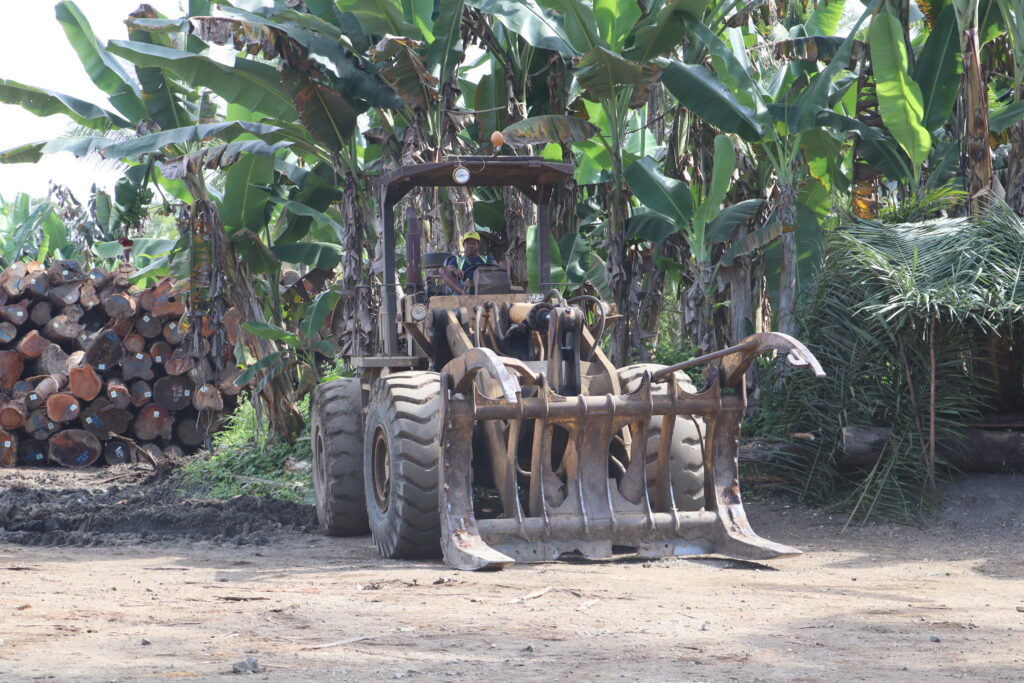
“Overall, this is a deep concern because what this means is that we are making a double mistake. We are loading the atmosphere with more greenhouse gases from fossil fuel burning and then all forms of greenhouse gas emissions causing an energy imbalance, loading heat into the system. And at the same time, we’re destroying our forest systems, which at a healthy state sequester carbon and help to cool the planet.
So rainforests are really Earth cooling systems when they’re healthy, but we are destroying them, meaning that we are both loading more heat by fossil fuel burning and greenhouse gas emissions and allowing ourselves to lose that cooling function.”
“This means the planet is losing resilience. And it’s losing this ability to buffer the stress caused by climate change and we are at risk of crossing thresholds leading to accelerated warming. And unfortunately, in the last 10 years, we now have statistically verified that we see accelerated warming. This is what makes many of us in the scientific community deeply, deeply concerned.
Because even though we’ve not been able to explain exactly why warming is accelerating, it’s very difficult to explain it without factoring in the first signs we now have that forest systems are starting to—not collapse, but lose their carbon uptake capacity.
This applies for tropical forest systems, temperate forest systems and boreal forest systems. All three of them are showing cracks in their capacity and their resilient ability to sequester carbon.”
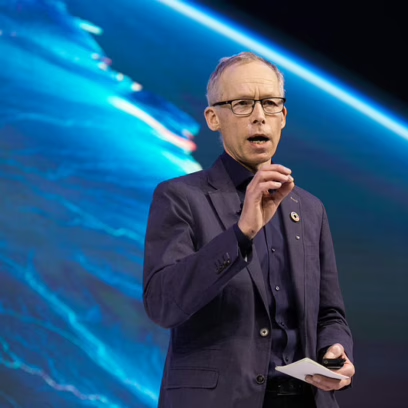
“By preserving forests, by investing in sustainability, we become winners… It is a winning journey. And Cool Earth is part of that winning journey.”
Why are healthy forests losing their ability to store carbon?
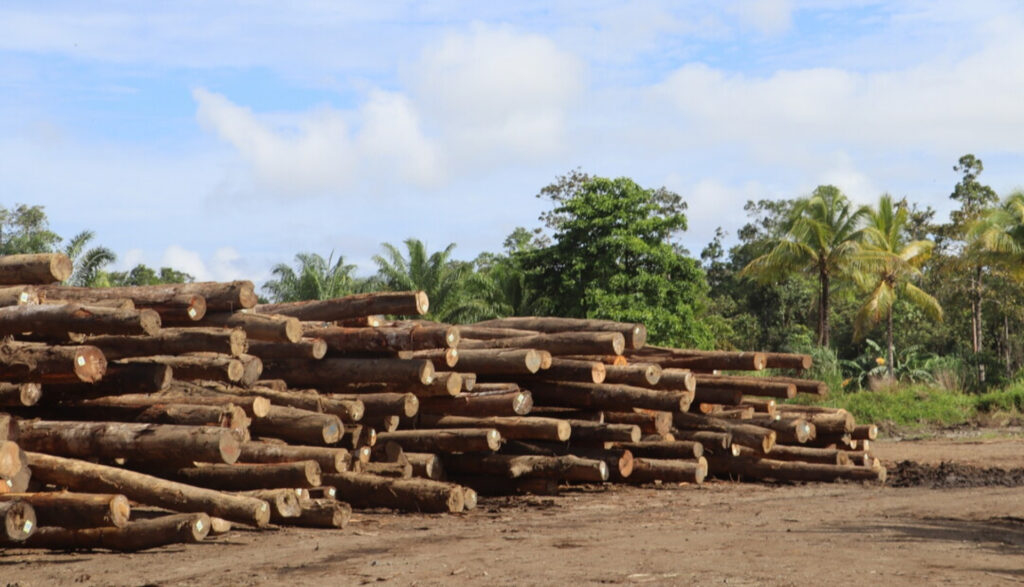
“In total carbon uptake, we’re seeing very strong signs of decline… this is related to forest fires. It’s related to disease outbreaks like bark beetle. It’s also related to unsustainable timber extraction. So it’s a combination of temperatures rising, water scarcity triggering more disease and more fire, and overall stress on photosynthesis.
Forests in a healthy state respond to the climate crisis by growing faster. But what we’re starting to understand now is that there’s a limit to that capacity because although forest grows faster, it’s not positive. It’s a stress response. And that stress response makes the trees more brittle, and it makes them more subject to abrupt crisis shocks like fires and droughts.
When we see the positive signs of a more carbon uptake in forests, of course we should thank the forest for this phenomenal service to humanity. But at the same time, we should recognize that this is putting pressure on the system. It’s not something that we can just lay back and say, “Well, isn’t that fantastic? The forests are doing this under stress.”
What is the current state of tropical deforestation, and how close is the tipping point?
“Tropical forest deforestation remains at an unacceptably high level. It’s a deep concern. And we’re coming very close to tipping points, to irreversible collapse of forest systems.
Deforestation continues. And as we mentioned earlier, we are today at roughly 18% of forest lost so far. And just a few weeks back, colleagues at the Potsdam Institute published the latest scientific paper of risk in the Amazon rainforest, showing that if we lose more than 22% of forest cover then the system is likely to cross a tipping point, meaning we can’t come back.
Not long ago we thought that the rainforest systems could cope with up to three degrees Celsius of warming, because that’s what the science indicated… But now we understand that we were wrong, and that the combination of losing biodiversity, changing hydrology and, in particular, deforestation reduces the forest system’s health and strength.”
“And today the assessment is that you exceed 20% of forest canopy loss, and you’re already in danger when you exceed 1.5°C. Remember, we are essentially at 1.5°C. And we will be breaching the 1.5°C limit more permanently already within the next five to ten years.
What keeps a rainforest in a rainforest state is its capacity to generate 40% of its own moisture recycling. And when you open that system—too much deforestation—you lose too much biodiversity… that feedback means that the system goes from self-moistening, when it has this convective rainfall generator, to become self-drying. And it simply moves into a savanna mode.
We are so close to crossing a tipping point in the Amazon rainforest… and what that means is that the system would cross the threshold and irreversibly move towards becoming degraded bush savanna.”
What happens if the Amazon crosses that tipping point?
“It’s not like a tsunami. It’s not a 24-hour collapse. It would probably take 100 years…
And you would lose the ecological and ecosystem services to all the Indigenous communities and societies inside, and also neighboring the biome. And you would then, after 100 years, end up in this degraded end state.
So even though it would take 100 years, some people may say, “it’s so far away, so we might not have to worry.” Well, I can tell you, we need to worry because if we press the on button, you would see an accelerated rate of losing more and more species biomass, more carbon emissions, accelerated warming, loss of fresh water.
São Paulo would be affected. Argentina would be affected. You would have a losing journey along the entire path until you too end up in that end state.”
Why is rainforest conservation work like Cool Earth’s so important?
“For so many reasons.
One reason is just because we know we’ve come to a point when we cannot allow ourselves to lose more forest. We have to halt that loss. And we know that there are multiple pressures on the system. We know that 91% of the deforestation in the Amazon is illegal today. So all forms of support for governance, for policing, for responsible stewardship are fundamentally important.
Secondly, I think it’s important to recognise that we also have so much evidence. You cannot sit back and wait until some magical wand comes down and top-down solves everything.”
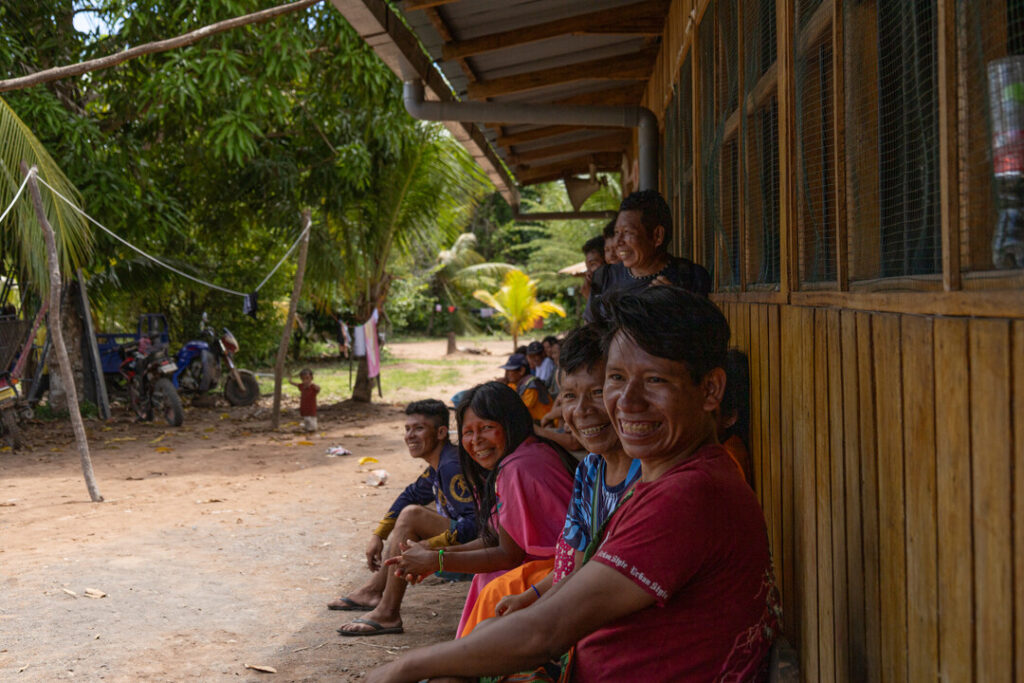
“We know that big transformative positive changes require multiple positive tipping points occurring from below, and Cool Earth contributes to that. And when these add up, they can be large enough to tip over the logic in the broader scheme of things.
Because we know—and that’s our kind of key card that we always know that we can and should play more often—is that by preserving forests, by investing in sustainability, we become winners. You come out with healthier, more resilient, more prosperous livelihoods. So it’s not a sacrifice. It is a winning journey.
And Cool Earth is part of that winning journey. And when doing it persistently and stubbornly across larger and larger communities and areas, it can tip over into becoming the winning logic.
And I think that is what, in my mind, actors like Cool Earth contribute with, which is fundamental.”
From planetary science to direct cash
Rockström’s science shows the Amazon is close to a tipping point it can’t come back from. His science also shows that Indigenous-led land stays standing. Put those together and unconditional cash to the people already protecting rainforest is one of the most scientifically grounded solutions to climate change we have, at a fraction of the cost of trying to fix a collapsed system later.
It’s why we back Indigenous communities directly, community by community, across the Peruvian Amazon, Papua New Guinea and the Congo.
We’re at 18% forest loss in the Amazon. The tipping point is 22%. We have a narrow window, and we know what closes it: backing the people already keeping rainforest standing.
About Johan and Simon

Johan Rockström
Lead AmbassadorJohan’s research as joint director of the Potsdam Institute for Climate Impact Research and role as Chief Scientist with Conservation International continues to be a global call to arms.
Having led an international group’s work to identify planetary boundaries, he has committed his career to lead the way on all things climate science, sustainability, and ensuring environmental thresholds are not crossed.

Simon Clark
AmbassadorDr Simon Clark is an award-winning science communicator and author from Bath, UK. He holds a master’s degree in Physics from St Peter’s College, University of Oxford, and a PhD in atmospheric physics from the University of Exeter. In 2023 he was made an Honorary Industrial Fellow of the University of Bristol.
Simon began creating YouTube content in 2010, initially focusing on guiding students from disadvantaged backgrounds through the competitive admissions processes of prestigious universities like Oxford and Cambridge. Drawing from his own experiences as a state school applicant, his early videos offered practical advice on applications, interviews, and insider perspectives. During his PhD at Exeter, his channel shifted toward science education, featuring series on atmospheric and cryospheric physics, as well as vlogs documenting graduate life. Since completing his doctorate, Simon’s content has centred on the climate crisis, while also exploring topics such as the history of science, machine learning, and mental health.
Over the years his YouTube channel has gone from strength to strength, accruing over 650,000 subscribers and over 80 million lifetime views.